














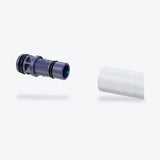


Quick answer: Before removal, a water-based radiator must be cool, safely isolated on both flow and return, depressurised and drained in a controlled manner. Water must be collected. Never work on pressurised connections. A heating professional must determine from the existing valves whether the radiator alone can be isolated or a larger section needs draining. If there is any uncertainty, leave removal to that professional.
What you can prepare
This guide helps you prepare for replacement or renovation. It does not give a sequence for undoing unions on an unidentified installation. Photograph the complete radiator, both connection areas and any identification plates. Leave covers and valves fitted while doing so. Note whether the radiator will be refitted later or removed permanently.
For a replacement, also have its height, width and existing connection measurements ready. The existing guide Measuring a radiator for replacement explains how to record them. Preparation stops before opening a water-carrying connection or operating an unidentified valve.
Bottom connections: have the fitting identified
An H-block or radiator connection fitting can combine several functions. Oventrop describes its Multiblock T as combining a thermostatic valve with an isolating fitting, with separate instructions for isolation and draining. This illustrates why “two pipes at the bottom” is not a sufficient working procedure. The functions must be identified on the fitting actually installed.
Ask the heating professional to identify the manufacturer, model and connection layout. Specifically clarify which isolation points serve the flow and return, and how open connections will be secured after removal. Instructions for a different H-block must not be applied without checking. This guide therefore does not prescribe universal turning directions, tool sizes or settings.
Isolation, depressurisation and collecting water
Isolation and draining are separate steps. Even for replacing an air vent, Schauerte specifies a depressurised radiator and a collection container with a cloth ready. Complete radiator removal also requires the professional to account for draining and residual water. A closed thermostat alone is not evidence that a connection can be safely opened.
Agree before the appointment how the floor and nearby furnishings will be protected and where water will be collected. The professional establishes safe shutdown using the installation's documentation. Do not loosen a union nut or plug as a “test”. If water leaks or isolation is uncertain, stop and contact a heating professional.
Blanking plugs: connection and sealing must match
For Multiblock T, Oventrop warns against using the plastic construction cap as isolation against atmospheric pressure with the radiator removed. Its instructions specify a metal closure plug or mounting bridge for that connection. This is not a universal parts list for other valves. It illustrates why the intended closure must be identified before removal.
Have the correct thread, sealing method and permitted closure established for your fitting. Do not choose a blanking plug solely from the pipe's apparent diameter. Also clarify how connections will remain protected during renovation and who will inspect them before reconnection. An arbitrary protective cap does not replace this preparation.
If the radiator will be replaced
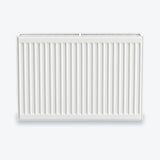
AKKAYA carries Type 22 valve radiators and Type 33 valve radiators. Both ranges specify six connections with 1/2-inch female threads: two on the left, two on the right and two at the bottom. This does not promise that existing pipes or a particular H-block will fit without adjustment.
The valve insert is supplied loose rather than pre-installed, according to the stated contents. Blanking and vent plugs supplied with the new radiator are not automatically suitable for securing open connections on the old installation. Have the professional select a replacement using dimensions, the connection drawing and required heat output.
Handing the job over to a heating professional
Provide photographs and a clear task description: temporary removal, replacement or permanent decommissioning. Ask for confirmation of isolation, depressurisation, draining and securing open connections. For refitting, include connection checks and recommissioning in the same assignment. Resolve unanswered questions before the appointment.
For an AKKAYA material enquiry, send the specification established by the professional through Contact. Collection in Hagen by arrangement is available. Work on the water-carrying heating installation and the decision on permanent decommissioning remain the professional's responsibility.
Frequently asked questions
Does it make sense to replace old radiators?
Replacement should address a specific need and suit the heating design. Have condition, connection dimensions and required heat output checked before selecting a new model. Age alone does not justify a blanket promise of savings or the need for replacement.
Can I remove a radiator without draining water?
This guide gives no general approval for doing so. The affected radiator must be safely isolated, depressurised and drained in a controlled manner, with residual water collected. A heating professional determines which section of the installation is involved.
Is turning down the thermostat enough?
Do not rely on that as proof of safe removal. Flow and return isolation, depressurisation and closure of open connections must be established. Never open a pressurised union.
Which blanking plug do I need after removal?
That depends on the connection fitting, its thread and sealing method. Have the closure specified before removal. Plastic protective caps or supplied radiator plugs must not be assumed suitable for securing the pipe connections without checking.
Sources and technical basis
Accessed on 18 November 2026: Oventrop Multiblock T: professional installation instructions, German pages 1–5; Schauerte S-Vent: depressurising a radiator and collecting water; AKKAYA product details for the linked Type 22 and 33 ranges. The Oventrop instructions do not confirm compatibility with these radiators.


