
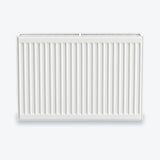



















Cleaning a radiator internally means removing accessible dust from between its convector fins. The radiator stays mounted and connected to the closed heating circuit. Switch off the heating for cleaning and wait until the radiator has cooled completely. Leave the valve, connections and air vent untouched.
Check the construction and instructions first
According to the product description, our Type 22 valve radiators have two heating panels and two convector fin assemblies. Type 33 has three heating panels and three convector fin assemblies. Here, internal cleaning refers to the air spaces, not the water-carrying interior.
How an upper grille or side panel can be removed depends on the model. The product information reviewed does not contain precise cover removal instructions. Do not pull off a panel experimentally or loosen unidentified screws. Obtain the correct manufacturer's instructions first.
Clean the fins without unnecessary dismantling
Prepare a cloth to catch dust and check which areas can be reached from above or below. Use only a cleaning tool intended by the manufacturer for the fins. Do not force a brush through a gap or let exposed metal scrape the coating.
For an example of cleaning without removing the grille, see Purmo's convector fin cleaning brush. This is a manufacturer's example, not confirmed accessory approval for our radiators. Establish that your model and tool are compatible before use.
Work only in accessible areas and carefully collect the loosened dust. Do not pour water or cleaner into the gaps. This guide recommends neither steam nor compressed air nor flushing an installed radiator.
Covers and external surfaces
If the model instructions permit cover removal for cleaning, follow them exactly. Do not loosen the radiator mounting or water-carrying connections. Stop cleaning yourself if the cover sticks or its fixing is unclear.
The coating's care instructions also apply when wiping the external surface. If information is missing, ask which cloth and cleaning product are approved. Do not use sharp tools to scrape away stubborn deposits. Persistent dirt does not justify chemical treatment without approval.
When to ask for help
Stop if you find moisture at connections, damaged coating or an insecure mounting. A heating professional should assess the condition. If the room stays cold despite a clean radiator, that requires a separate diagnosis; removing dust does not replace checking the heating system.
Frequently asked questions
How do I clean a radiator beneath a window sill?
Switch off the heating and let the radiator cool. Clean only the areas reachable with an approved tool. If space is insufficient, do not force either the brush or grille removal.
Can I clean the radiator without removing the cover?
This may be possible depending on the construction and suitable tool. The manufacturer's instructions determine the procedure. No blanket assurance is given for every cover or fin arrangement.
Must I loosen the valve for cleaning?
No. This cleaning concerns accessible surfaces and air spaces only. Valve work and opening the heating circuit are outside its scope.


